
Helping People Discover What You Have to Offer
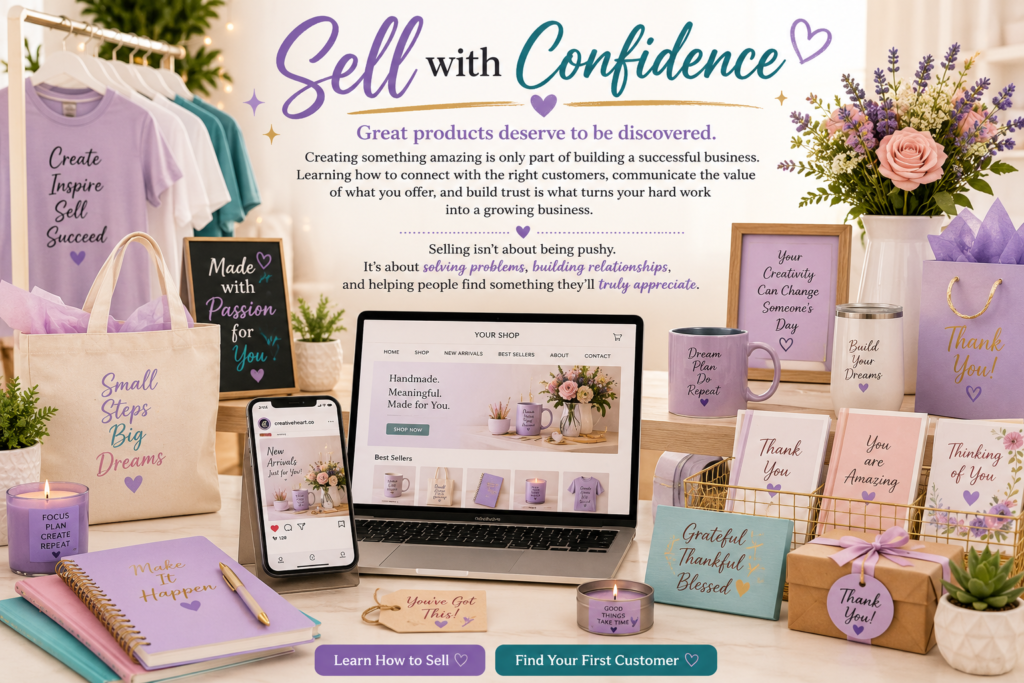
Sell with Confidence
Great products deserve to be discovered.
Creating something amazing is only part of building a successful business. Learning how to connect with the right customers, communicate the value of what you offer, and build trust is what turns your hard work into a growing business.
You do not have to be a natural salesperson to sell with confidence. You simply need to believe in the value of what you offer, understand how it can help someone, and be willing to talk about it clearly. Selling is not about being pushy. It is about solving problems, building relationships, and helping people find something they will truly appreciate.
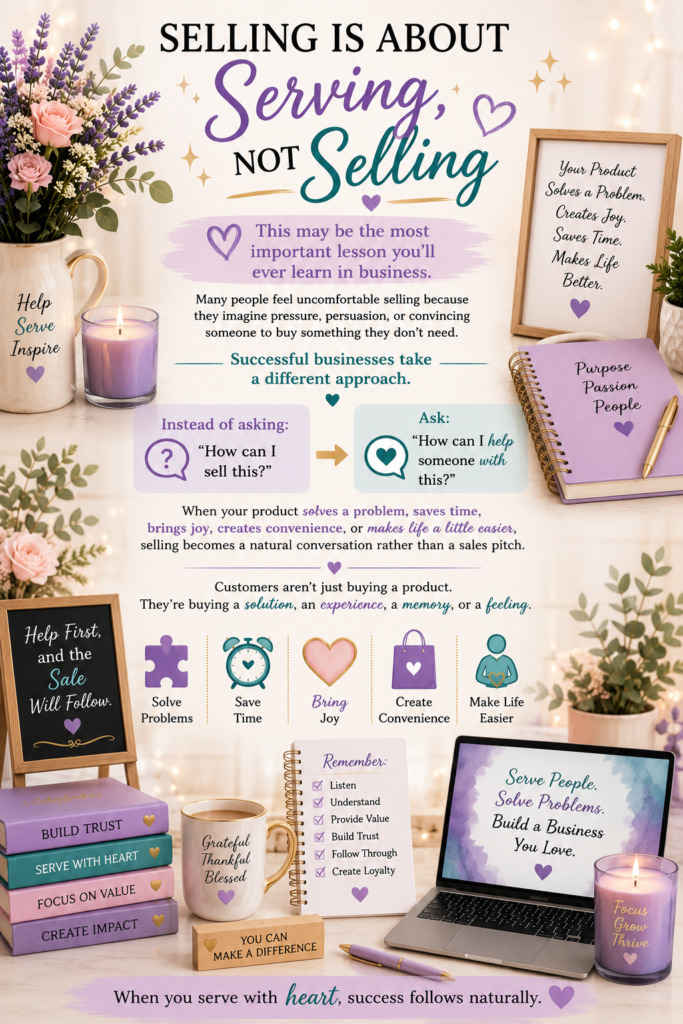
Selling Is About Serving, Not Selling
Many people feel uncomfortable selling because they picture pressure, persuasion, or trying to convince someone to buy something they do not need.
A better approach starts with understanding the customer. What problem are they trying to solve? What would make their life easier, save them time, bring them joy, or give them a better experience?
When your product or service provides real value, selling becomes less about convincing and more about helping the right person understand why your offer may be useful to them.
Customers are not only buying an item. They may be buying convenience, confidence, a solution, an experience, a gift, or a feeling. Your job is to communicate that value clearly and honestly.
Where Can You Sell?
You do not need to sell everywhere to build a successful business. The right sales channel depends on what you offer, who your customers are, how they prefer to shop, and how much time and money you can realistically manage.
Some businesses work best online. Others do better at markets, pop-up events, local shops, or through direct orders. Many eventually use a combination of channels.
Start with one or two places where your customers are most likely to find you, learn what works, and expand when it makes sense.
Ways You Can Sell
🛍 Vendor Markets & Pop-Up Events
Sell directly to customers at craft shows, festivals, community events, markets, and pop-up shops. In-person selling can be especially useful for products customers want to see, touch, smell, try, or personalize.
💻 Your Own Website
Your website gives you more control over your brand, pricing, customer experience, and how you communicate with buyers. Platforms such as Shopify and WooCommerce can help you build an online store, while service-based businesses can use their website for inquiries, appointments, or bookings.
🧺 Online Marketplaces
Marketplaces such as Etsy can help customers discover handmade, personalized, vintage, and digital products. They can give newer sellers access to an existing audience, but strong photos, clear descriptions, thoughtful pricing, and dependable customer service still matter.
📱 Social Media
Facebook, Instagram, Pinterest, TikTok, and other platforms can help people discover your work, understand what you offer, and get to know your business. Use social media to build interest and trust, then make it easy for customers to find the correct place to purchase, order, or contact you.
🤝 Local, Wholesale & Partnership Opportunities
Boutiques, gift shops, salons, offices, organizations, and other local businesses may offer opportunities for wholesale, consignment, referrals, collaborations, or product placement. These relationships can help you reach customers beyond your own audience.
📝 Direct Orders & Services
Not every business needs a traditional online store. Custom orders, consultations, appointments, classes, catering, freelance work, and other services may be sold directly through an inquiry form, booking system, invoice, or approved payment method.
Liz’s Tip
Do not try to sell everywhere at once.
Choose one main sales channel, learn how it works, and build confidence before adding another. A focused business usually grows faster than one that is stretched too thin.
Ready to Make Your First Sale?
Your first sale does not have to come from a perfect website, a huge audience, or an expensive setup. Start by choosing one place to sell, make sure customers can clearly understand what you offer, and give them a simple way to buy or contact you.
Pay attention to what people ask, what they respond to, and what actually sells. Then use that information to improve your offer, pricing, presentation, and sales process.
The goal is not to sell everywhere. The goal is to make it easy for the right customer to say yes.