
This year when you go to the supermarket or even a grocery store you feel that things are starting to be of a higher price. If your grocery bill feels higher even though you are buying the same things, you are not imagining it.
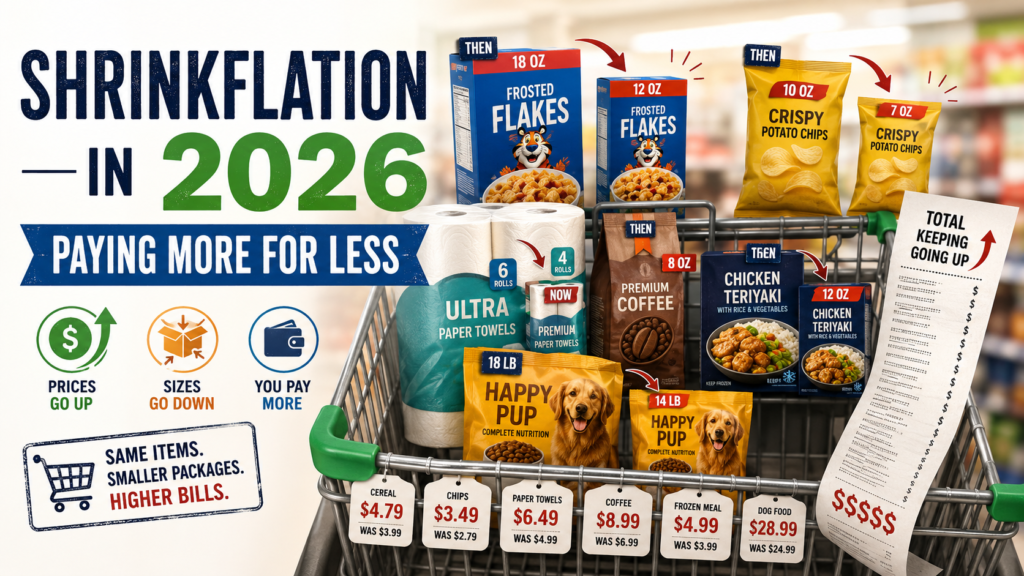
Maybe you picked up your usual cereal, snacks, paper towels, coffee, frozen food, or pet food and thought, “Did this package get smaller?” Then you looked at the price and realized it did not feel smaller at checkout.
That is the part that frustrates people. Prices are already stressful enough. But when the package quietly shrinks and the price stays the same, it feels like you are paying more without anyone saying it out loud.
That is shrinkflation.
Shrinkflation in 2026 is one of those money problems that can sneak into your cart without looking obvious. You may not notice it during one shopping trip, but over time it can make your grocery budget feel tighter, your pantry run out faster, and your usual shopping routine feel more expensive. Three years ago you were able to fill a shopping card and today with the same amount you can only fill a basket. In some instances it is less.
And honestly, it is frustrating because most families are already trying. People are clipping digital coupons, comparing stores, buying store brands, cooking at home, and cutting back where they can. So when the package size changes quietly, it can feel like one more thing working against you.
The good news is that once you know what to look for, you can start spotting shrinkflation before it drains more of your money.
What Is Shrinkflation?
Shrinkflation happens when a product gets smaller, but the price does not go down enough to match the smaller size.
The U.S. Government Accountability Office explains shrinkflation as product downsizing, where manufacturers reduce the quantity of an item without a matching price drop. Sometimes the price stays the same. Sometimes the price drops slightly, but the cost per ounce, pound, sheet, or serving still goes up.
That means you may pay the same shelf price while getting less product.
For example:
- A snack bag goes from 12 ounces to 10 ounces, but the price stays the same.
- A paper towel roll has fewer sheets, but the package still looks almost identical.
- A cereal box gets narrower, but the front of the box still looks familiar.
- A bottle has fewer ounces, but the label design barely changes.
- A frozen meal weighs less, but the price does not feel much different.
That is why shrinkflation in 2026 can be hard to catch. The shelf price may not scream “price increase,” but the unit price tells the real story.
Why Shrinkflation Feels So Sneaky
The reason shrinkflation bothers people so much is because it does not always look like a normal price increase.
When milk goes from $3.49 to $4.29, you notice. The price changed right in front of you.
But when a box looks almost the same and quietly gives you less food, it is easier to miss.
That is what makes shrinkflation in 2026 such a real problem for shoppers. You may think you are buying your normal groceries, but the amount inside the package may not be the same as it used to be.
And when you are shopping quickly, tired, busy, or trying to stay under budget, you probably are not stopping to read every ounce, sheet count, serving size, or unit price.
Most people are just trying to get through the store and get home.
The Grocery Bill Pain Is Real
If you feel like groceries are still squeezing your budget, the numbers back that up.
The Bureau of Labor Statistics reported that food-at-home prices were up 2.7% over the 12 months ending in May 2026. That means even before you factor in smaller packages, many families are already dealing with higher food costs.
Then shrinkflation adds another layer.
You may be paying more because prices went up, but you may also be paying more because the package is smaller than it used to be.
That is why a grocery budget can feel impossible to manage. You are not just fighting higher prices. You are also trying to catch quiet changes in package sizes, servings, ounces, sheets, and counts.
And that can wear people out.
The Proof Is in the Unit Price
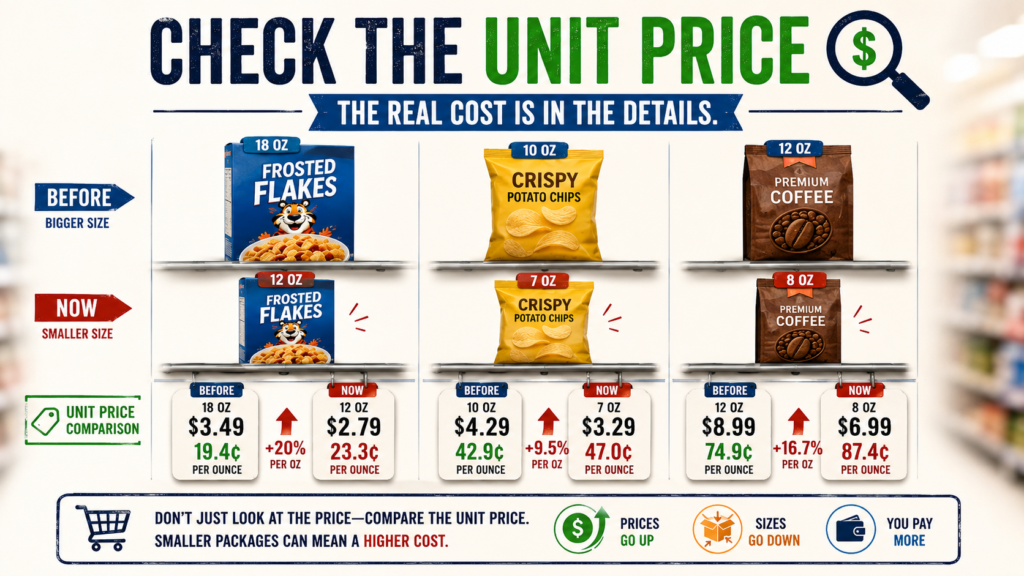
The easiest way to spot shrinkflation is not by looking at the front of the package.
It is by looking at the unit price.
The unit price tells you what you are really paying per ounce, pound, count, sheet, or item. This is where shrinkflation in 2026 becomes easier to see.
For example, two boxes of crackers may look close in price:
- Box A: $3.99
- Box B: $4.49
At first, Box A looks cheaper.
But if Box A is smaller and costs more per ounce, it may not actually be the better deal.
That is the proof most shoppers miss. The shelf price tells you what you pay today. The unit price tells you what you are really paying for the amount you get.
If you want to fight shrinkflation in 2026, start checking the unit price before you decide something is a good deal.
A 2026 Study Shows Package Sizes Matter
Shrinkflation is not just something shoppers complain about online.
A 2026 study from a UMass Amherst economist found that shrinking package sizes can hide a meaningful part of food inflation. The study summary explained that smaller package sizes reduced the amount people received and added pressure to food costs.
That matters because shoppers do not always notice the package change right away.
A product may look familiar. It may sit in the same place on the shelf. It may use the same colors, brand name, and design. But the amount inside may be different.
That is why package size matters just as much as price.
Where Shrinkflation Shows Up Most
Shrinkflation in 2026 can happen in many product categories, but there are a few places where shoppers should pay close attention.
1. Snacks
Chips, crackers, cookies, granola bars, and snack packs are common places to notice smaller packages.
The bag may look the same size because of air, packaging shape, or design, but the ounces may be lower than before.
Before buying, check the weight and compare it to another brand or store-brand option. Also when you open the bag look at it before you start grabbing that snack. Seems like you are getting less. There seems to be more air than the snack.
2. Cereal and Breakfast Foods
Cereal boxes are one of the easiest places to miss shrinkflation because the box may still look tall on the shelf.
Check the ounces, not just the size of the box.
If your family goes through cereal quickly, a smaller box can make a noticeable difference over the month.
3. Coffee and Drinks
Coffee, juice, drink mixes, and bottled beverages can change in size without being obvious.
A bag of coffee may look familiar, but it may hold fewer ounces than it used to. If you buy coffee often, this can add up fast.
4. Frozen Foods
Frozen meals, frozen vegetables, pizza, breakfast items, and prepared foods can also shrink.
This matters because people often buy frozen foods for convenience. If the portion gets smaller, you may need to buy more to feed the same number of people.
5. Paper Products
Paper towels, toilet paper, tissues, trash bags, and cleaning wipes can be tricky.
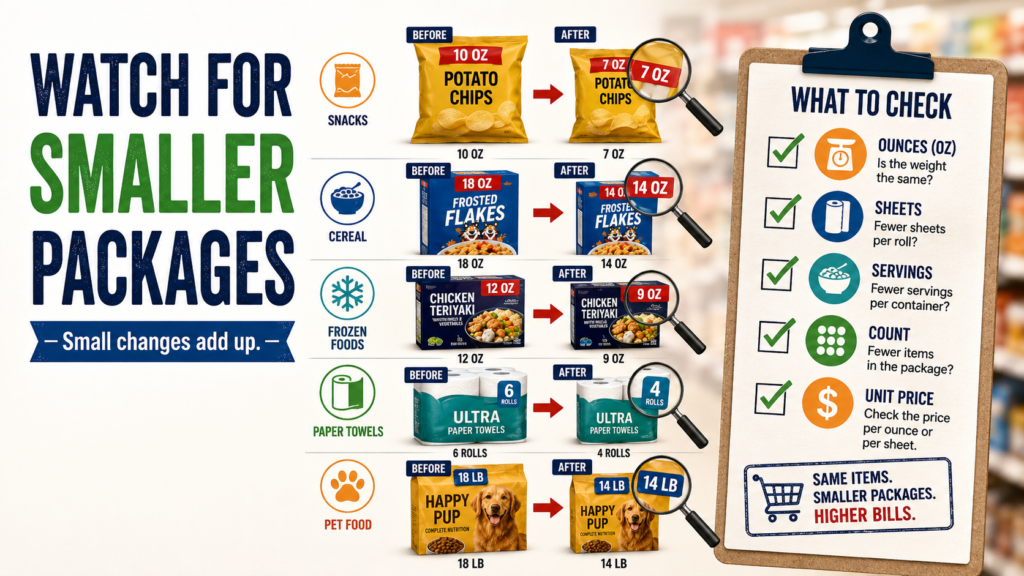
Do not only look at the package size. Check:
- Number of rolls
- Sheets per roll
- Total square feet
- Count per box
- Thickness or ply
A pack may look like the same deal until you realize there are fewer sheets or less product inside.
6. Pet Food and Pet Supplies
Pet owners should also pay attention.
Pet food bags, treats, litter, and cleaning products can change in size too. If the bag is smaller but your pet eats the same amount, you will run out faster and buy more often.
7. Pantry Staples
Pasta, rice mixes, baking items, sauces, condiments, and canned goods can also be affected.
Even small changes matter if it is something you buy every week.
Grocery Shopping Hacks for Shrinkflation in 2026
You cannot control what companies put in a package, but you can control how you compare products before you buy.
Here are simple grocery shopping hacks for shrinkflation in 2026 that can help you protect your budget.
1. Check the Unit Price First
Before you look at the sale sticker, look at the unit price.
The unit price is usually listed on the shelf tag. It may say:
- Price per ounce
- Price per pound
- Price per count
- Price per 100 sheets
- Price per square foot
This is one of the best ways to compare products fairly.
A sale is not always a deal if the package is smaller.
2. Compare Store Brands
Store brands can sometimes give you more products for less money, but not always.
Let’s do this when shopping. Once you grab that favorite product, grab one that is the name brand and then grab one that is store brand. Check the unit price between the name brand and store brand.
Sometimes the store brand is the better deal. Other times, a name-brand sale or coupon may beat it.
The point is not to always buy one or the other. The point is to compare before choosing.
3. Watch for “New Look” Packaging
Be careful when you see phrases like:
- New look
- New packaging
- Same great taste
- Family size
- Mega size
- Bonus size
- Improved formula
Those phrases do not automatically mean something is wrong, but they are worth checking.
Sometimes packaging changes are just design updates. Other times, they hide a size change.
Flip the package around and check the ounces or count.
4. Keep a Short List of Items You Buy Often
You do not need to track every single grocery item. That would be exhausting.
Instead, track your usual repeat purchases:
- Cereal
- Coffee
- Snacks
- Paper towels
- Toilet paper
- Pet food
- Laundry detergent
- Frozen meals
- Pasta
- Bread
- Eggs
- Milk
Write down the usual size and price of the items you buy most often. When something changes, you will notice faster.
5. Buy by Need, Not by Habit
Shrinkflation works best when people shop on autopilot.
If you always grab the same brand without checking the size, you may keep paying more without realizing it.
Before putting the usual item in your cart, pause and ask:
- Is this still the best price?
- Did the package size change?
- Is the store brand cheaper per ounce?
- Is there a better deal in a larger size?
- Do I actually need this right now?
That small pause can save money over time.
6. Use Curbside Pickup to Compare Prices Slower
One thing that helps is using curbside pickup or store apps to compare prices before you get to the store.
When you are standing in an aisle with kids, noise, a list, and a limited amount of time, it is harder to compare.
But at home, you can look at:
- Unit price
- Package size
- Store brand options
- Digital coupons
- Pickup deals
- Weekly sale items
This does not mean you have to buy everything online. It just gives you more time to make better choices.
7. Do Not Assume Bulk Is Always Better
Warehouse clubs and bulk packages can be helpful, but they are not always the cheapest option.
Before buying the bigger package, check:
- Price per ounce
- How fast your household uses it
- Whether it will expire
- Whether you have storage space
- Whether a smaller sale item is actually cheaper per unit
A giant package is not a deal if half of it goes bad or sits unused.
This is also where your own shopping habits matter. Buying in bulk can save money, but only when the unit price is better and your household will actually use the product.
What Not to Do
When people realize they are dealing with shrinkflation, it is easy to feel angry and overwhelmed.
That is understandable.
But the goal is not to panic or spend hours tracking every ounce in your pantry. The goal is to become more aware of the products that affect your budget the most.
Do not try to track everything.
Do not blame yourself for missing it before.
Do not assume every sale is a deal.
Do not assume every bigger package saves money.
Do not assume the same product is the same size as last year.
Start small. Pick five items you buy often and begin checking those first.
A Simple Shrinkflation Check Before You Buy
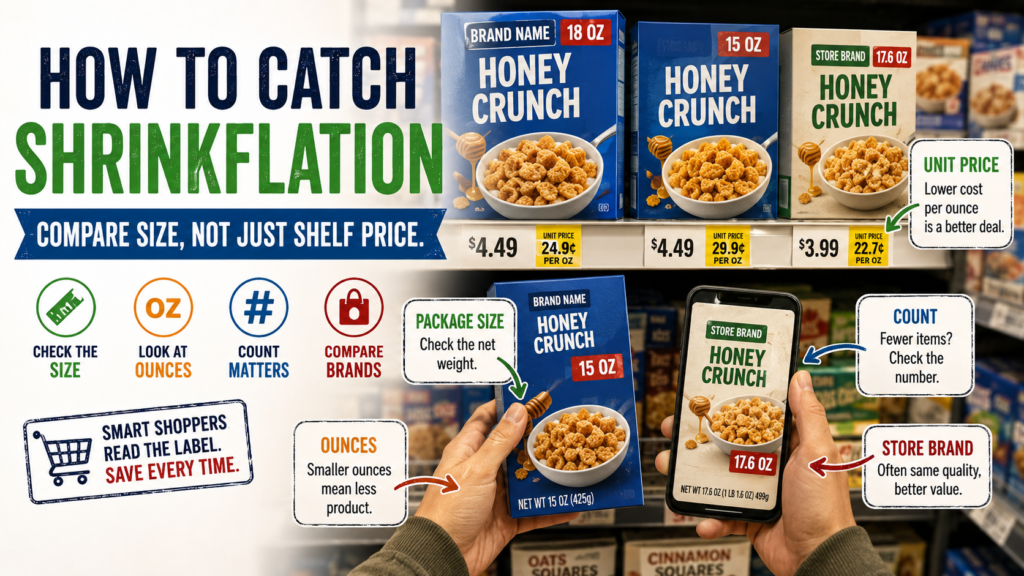
Before you put an item in your cart, ask these questions:
- What is the price?
- What is the size?
- What is the unit price?
- Is there a store-brand option?
- Is the larger or smaller size actually cheaper per unit?
- Has the package changed recently?
- Will my household use all of this before it expires?
This simple check can help you spot shrinkflation in 2026 without making grocery shopping feel complicated.
How This Helps Your Budget
Shrinkflation may seem small item by item, but the effect can build over time.
If five or ten things in your cart are smaller than before, your groceries may run out faster. That means another store trip, another pickup order, or another “quick stop” that turns into spending more.
This is why shrinkflation matters.
It is not just about one smaller box. It is about how many small changes quietly affect your monthly budget.
When you start checking unit prices and package sizes, you make better choices. You may decide to switch brands, buy a different size, wait for a sale, use a coupon, or skip the item altogether.
That is not being cheap. That is being aware.
Have You Noticed Shrinkflation in Your Own Cart?
One of the most frustrating parts of shrinkflation in 2026 is that many people do not notice it right away. You may only realize something changed when the snack bag runs out faster, the cereal box feels lighter, or the paper towels do not last as long as they used to.
Take a look at a few items you buy every week. Check the ounces, count, servings, or sheets and compare them to another brand or size. You may be surprised by what you find.
Have you noticed a product getting smaller while the price stays the same? Pay attention during your next grocery trip and write down a few examples. Those small changes can explain why your grocery budget feels tighter even when your shopping list has not changed much.
Related Money-Saving Guides
If grocery prices are stretching your budget, you may also like this guide on how to lower your grocery bill this year.
If you keep asking yourself why your money disappears so fast, read Why Am I Always Broke? The Small Habits Quietly Draining Your Money and How to Change Them.
Before stocking up at a warehouse store or buying family-size packages, read Is Buying in Bulk Cheaper? 7 Things You Must Know Before Buying.
For more practical budget help, check out this guide on how to start saving money when you feel broke.
The U.S. Government Accountability Office explains shrinkflation as product downsizing, where shoppers may receive less product even when the shelf price looks the same.
The Bureau of Labor Statistics reported that food-at-home prices were up 2.7% over the 12 months ending in May 2026, which helps explain why grocery bills still feel heavy for many families.
A 2026 study from a UMass Amherst economist found that smaller package sizes can hide part of the real increase shoppers feel when buying food.
Frequently Asked Questions About Shrinkflation
What is shrinkflation?
Shrinkflation happens when a product gets smaller but the price stays the same or does not drop enough to match the smaller size. You may still pay the same amount at checkout, but you are getting less product for your money.
Why is shrinkflation happening in 2026?
Shrinkflation in 2026 is happening because companies are trying to manage higher costs without always showing shoppers a direct price increase. Instead of raising the shelf price, some products quietly shrink in size, servings, ounces, sheets, or count.
How can I tell if a product has shrinkflation?
The easiest way to spot shrinkflation is to check the unit price, package size, ounces, servings, or count. Do not only look at the front of the package. Compare the actual amount inside with similar products before deciding which one is the better deal.
Is shrinkflation the same as inflation?
Shrinkflation and inflation are related, but they are not exactly the same. Inflation usually means prices are going up. Shrinkflation means the product size is going down while the price stays the same or does not drop enough to match the smaller amount.
What products are most affected by shrinkflation?
Shrinkflation often shows up in groceries, snacks, cereal, coffee, frozen foods, paper towels, toilet paper, pet food, cleaning supplies, and pantry staples. These are items many families buy often, so even small size changes can add up over time.
How can I protect my grocery budget from shrinkflation?
To protect your grocery budget from shrinkflation in 2026, check unit prices, compare store brands, watch package sizes, avoid shopping on autopilot, and track the items your household buys most often. You do not have to check everything, but paying attention to your regular purchases can help.
Final Thoughts
Shrinkflation in 2026 is frustrating because it makes people feel like they are doing everything right and still falling behind.
You are buying the same groceries. You are trying to stick to a budget. You are watching prices. But the packages may be smaller, the portions may not last as long, and the real cost may be higher than it looks.
That is why the proof matters.
The front of the package may not tell you the full story. The unit price, package size, and number of servings will.
You do not have to become obsessed with every label in the store. Just start paying closer attention to the items you buy the most.
Small checks can lead to smarter choices, and smarter choices can help you protect your grocery budget one trip at a time.