
Have you ever thought, “It’s not that hot — my dog will be fine”?
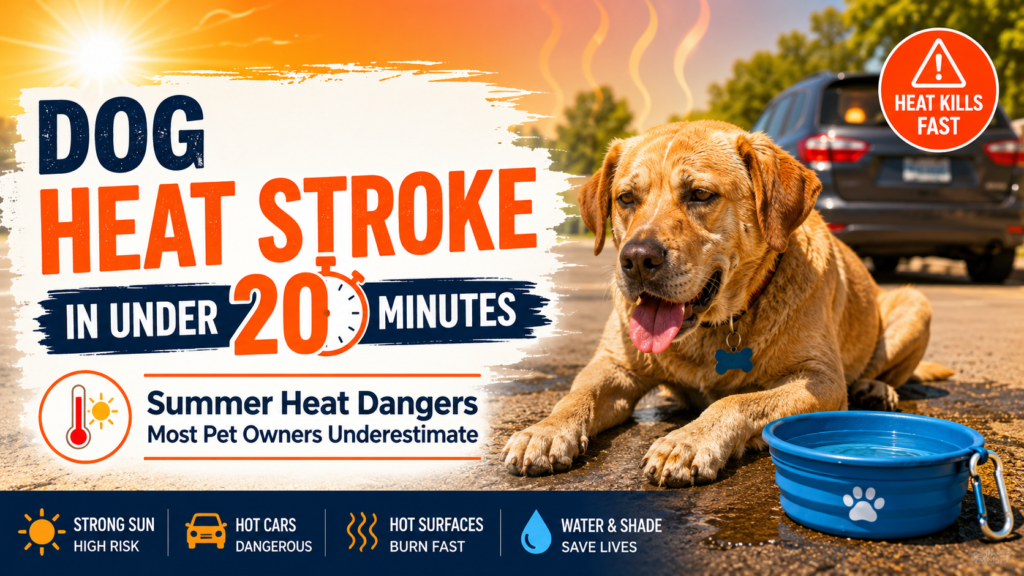
Dog heat stroke can happen faster than many pet owners realize, sometimes in under 20 minutes when heat, humidity, hot pavement, or a parked car are involved.
Here’s the truth that veterinarians across the country are repeating this week as summer temperatures climb: dogs do not cool themselves the way we do. They cannot sweat through their skin. They rely almost entirely on panting to release body heat and when the air they’re breathing is itself hot, panting stops working. Heat stroke in dogs can develop in under 20 minutes, and once it starts, it escalates fast.
In this post, I’m going to walk you through the summer heat dangers most pet owners don’t think about until it’s too late, including some that will genuinely surprise you. I have six dogs myself. This information is close to my heart.
Summer Pet Safety Checklist
A printable checklist covering every danger in this post plus daily summer safety habits designed to keep your routine simple and your dogs safe. Grab the Free 4-Page Summer Dog Safety Checklist
Why Dogs Overheat So Much Faster Than We Expect
Let’s talk about what’s actually happening inside your dog’s body on a hot day, because once you understand it, everything else in this post makes more sense.
Dog heat stroke becomes dangerous because a dog’s body temperature can rise faster than their cooling system can handle.
Humans cool ourselves by sweating across our entire skin surface. The moisture evaporates, taking heat with it. Dogs only sweat through their paw pads a tiny fraction of their total body surface. Their primary cooling mechanism is panting: breathing in air that passes over the moist surfaces of their mouth and lungs, evaporating moisture and releasing heat.
The problem is obvious once you see it: when the air temperature is 90°F and humidity is high, the air your dog is panting in is almost as warm as their body. Panting works less and less efficiently. Their body temperature climbs. And because it’s climbing faster than the cooling system can handle heat stroke develops.
A normal dog body temperature is 101–102.5°F. Heat stroke begins around 104°F. At 106°F and above, organ damage can begin within minutes.
Dog Heat Stroke Warning Signs Every Pet Owner Should Know
Danger 1: The Hot Pavement Nobody Tests
One of the most shared tips from veterinarians this week is the pavement test and it’s one most pet owners have never heard.
One of the easiest ways to lower the risk of dog heat stroke is to check the ground before every walk.
Place the back of your hand flat on the pavement for five to seven seconds. If you cannot comfortably hold it there it is too hot for your dog’s paw pads.
When the air temperature is 77°F, asphalt in direct sun reaches 125°F. At 87°F air temp, asphalt can hit 143°F. Paw burns from hot pavement can happen in 60 seconds of contact.
Signs of paw burns: limping, licking or chewing paws excessively, pads that appear red, blistered, or darker than normal, reluctance to walk.
What to do: Walk early in the morning or late in the evening before 10am and after 6pm during peak summer months. Stick to grass and shaded paths whenever possible. If you must walk during the day, paw protection wax or dog booties create a barrier between the pad and the surface.
Danger 2: The Car You Parked for “Just a Minute”
A parked car can turn dog heat stroke into an emergency in minutes, even when the windows are cracked.
Every summer, this warning gets repeated and every summer, dogs still die in hot cars. Not because owners don’t care. Because the temperature increase happens faster than people expect.
On an 85°F day, a car interior reaches 104°F in 10 minutes. After 30 minutes: 120°F. Cracked windows reduce interior temperature by an average of 3°F, statistically meaningless.
The rule: If your dog cannot come inside with you, your dog stays home. Period.
This is not a judgment, it is a physiological reality. A 10 minute errand in a hot car has ended lives. Leave them home on warm days. If you see a dog in a hot car and are concerned about their safety, most states allow Good Samaritans to break a window to rescue an animal in immediate danger.
Danger 3: Certain Breeds That Struggle Even More
If you have a brachycephalic dog, a breed with a flat or shortened face your dog is at significantly higher heat risk than the average dog.
Brachycephalic breeds include: English Bulldogs, French Bulldogs, Pugs, Boston Terriers, Shih Tzus, Boxers, Cavalier King Charles Spaniels, and Pekingese.
Because of their anatomy, these dogs cannot move air efficiently through their respiratory tract. Their panting is less effective than other breeds under baseline conditions and in heat, this deficit becomes dangerous much faster.
If you have a flat-faced dog: Keep them in air conditioning during the hottest part of the day. Limit outdoor time to early morning and evening. Know the signs of heat stroke (below) and act faster than you think you need to.
Senior dogs, overweight dogs, and dogs with heart or lung conditions are also at elevated risk.
Danger 4: Communal Water Bowls
Most people do not think of the water bowl at the dog park, pet store, or hiking trail as a danger but veterinarians caution against communal water sources consistently.
These bowls can harbor bacteria, viruses including Leptospira, and parasites that your dog would not encounter at home. During summer, when dogs are out more, the contact risk increases.
What to do: Bring your own water and collapsible dog travel bowl on every outing. Keep it clean. Offer water frequently more than you think your dog needs, especially during exercise.
Danger 5: Inside Your Home Without Air Conditioning
Many people assume that keeping their dog inside during hot weather is automatically safe. It often is but not always.
Homes without air conditioning or fans can reach interior temperatures significantly above outdoor air temperature, particularly on upper floors and in rooms with south or west facing windows. A home interior at 95°F is not safer than shade outside.
Signs your home is too hot for your dog: panting heavily while resting, seeking the bathroom or garage floor (the coolest hard surfaces), lethargy, excessive drooling.
Cooling strategies for homes without AC:
- Move your dog to the lowest floor (heat rises)
- Close blinds and curtains on sun-facing windows during the day
- Run fans ceiling fans, box fans pointed toward their resting area
- Place a cooling mat dampened towel on the floor for them to lie on
- Keep fresh cool water available at all times — refresh it every few hours
- Know which public places allow dogs if your home becomes unsafe (some libraries, hardware stores, and pet-friendly businesses)
The Signs of Heat Stroke — Know These Before You Need Them
Recognizing heat stroke early is the difference between a veterinary treatment and a tragedy. These signs escalate quickly:
Early warning signs (act now — don’t wait):
- Excessive, intense panting
- Drooling more than usual
- Restlessness, pacing
- Seeking cool surfaces
Progressing heat stroke (emergency — go to vet immediately):
- Glazed eyes, unfocused appearance
- Vomiting or diarrhea
- Gums that appear bright red, then pale or blue tinged
- Weakness, stumbling
- Elevated heart rate
Severe heat stroke (call emergency vet on the way):
- Collapse
- Seizures
- Loss of consciousness
What to do on the way to the vet:
- Move your dog to a cool, shaded area or air-conditioned space immediately
- Apply cool (not cold not ice) water to their paw pads, armpits, groin, and neck
- Do not force them to drink if they are not alert
- Call the vet on the way so they can prepare
The best way to prevent dog heat stroke is to build a simple summer routine before the hottest days arrive.
Your Summer Routine 4 Simple Habits That Keep Them Safe
You don’t need a complicated protocol. You need four consistent habits:
1. The 5-second pavement test before every walk. Hand down, count to five. Too hot for you? Too hot for them.
2. Walk at the right time. Before 10am or after 6pm during summer months. Every day.
3. Fresh cold water, always. Dogs in hot weather need more water than most owners provide. Refresh it frequently. Add ice cubes if you like, most dogs love them.
4. Know your dog’s baseline. What does your dog look like when they’re comfortable? Happy? Their normal panting level? Knowing their normal helps you recognize when something is off faster.
Summary
- Dogs can develop heat stroke in under 20 minutes
- The pavement test: hand down 5 seconds if you can’t hold it, don’t walk your dog on it
- Never leave your dog in a car, even with windows cracked
- Brachycephalic breeds, seniors, and overweight dogs are at higher risk
- Know the heat stroke signs so you can act before it becomes an emergency
- Download the FREE Summer Pet Safety Checklist
Your Turn
Do you have 6 dogs like me? One? Something in between? I’d love to drop a comment telling me how many dogs you have and what your summer routine looks like to keep them safe.
And please share this post before you go. Summer heat kills dogs every single year and most of those losses happen because the owner doesn’t know how fast it happens. If you share this with one other pet owner today, you might prevent exactly that.
Share this post | Download the checklist | Subscribe for weekly pet tips
Frequently Asked Questions
How do I know if my dog is just hot or actually in danger? Normal post-exercise panting that calms down within 10 minutes in a cool environment is fine. Panting that doesn’t slow down, is combined with drooling or lethargy, or happens at rest in a cool environment warrants concern. When in doubt, move them to air conditioning and watch closely. If they don’t improve within 10 minutes, call your vet.
Can I use ice to cool down a dog with heat stroke? Use cool water, not ice, not ice packs directly on skin. Ice can cause blood vessels near the skin to constrict, which actually traps heat inside the body. Cool water on the paws, armpits, and groin is the right approach on the way to the vet.
My dog is panting heavily right now. What should I do? Move them to the coolest space available, offer water, and apply cool water to their paws. If panting doesn’t reduce significantly within 10 minutes or if they show any of the more serious signs above, call your veterinarian immediately.
What’s the best way to keep my dog cool if I don’t have AC? Cooling mats, fans, cool water, and the lowest floor of your home are your best tools. Many areas also have cooling centers that allow pets. On extreme heat days, a pet-friendly friend or family member with AC is worth asking.
Can cats get heat stroke too? Yes. Cats are slightly more heat-tolerant than dogs but are still vulnerable. Watch for the same signs: excessive panting (cats rarely pant normally), lethargy, drooling. Cats are better at finding their own cool spots but still need fresh water and a cool environment available.
Final Thoughts
Six dogs is a lot of love. It’s also a lot of responsibility especially in summer. The dogs in our homes trust us completely to recognize when they need help and to act before things get serious. They cannot tell us they’re overheating. They show us, in ways that are easy to miss if we don’t know what to look for.
I hope this post helps you see those signs before you ever need to act on them.
If you have more than one pet and you want your home not to smell like them, read our post on How to keep your house from smelling like dog it covers where the smell hides, sprays to use, and how to make them at home.
Stay safe out there, all of you, and all of your dogs.