
You formed your LLC. You got your EIN. You opened a business bank account. Maybe you even paid for a website, ordered business cards, bought supplies, and officially started calling yourself a business owner.
Then you walked into a bank looking for money to help grow the business.
And the bank said no.
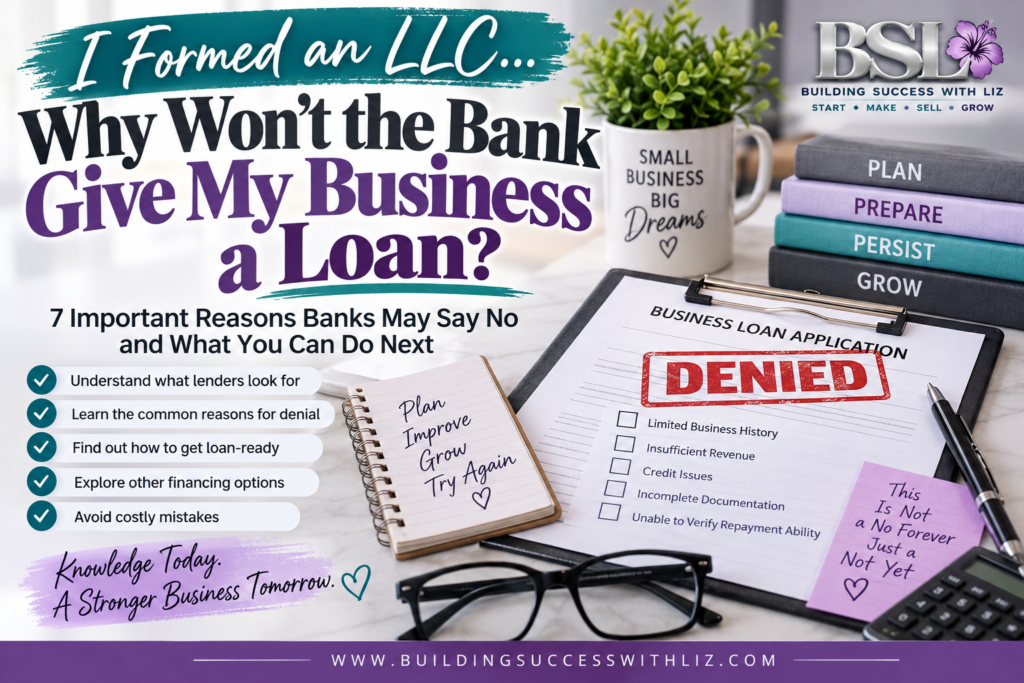
That can be confusing, especially when so much beginner business advice makes forming an LLC sound like the moment your business becomes financially established. But registering an LLC and qualifying for an LLC business loan are two very different things.
An LLC gives your business a legal structure. It does not automatically give the business a strong credit history, steady revenue, positive cash flow, collateral, or proof that it can repay borrowed money.
The U.S. Small Business Administration explains that businesses seeking SBA-backed financing generally must be creditworthy and demonstrate a reasonable ability to repay. Lenders can consider factors such as credit history, cash flow, equity, and collateral when evaluating borrowers.
So if your LLC was approved last Tuesday and you’re wondering why the bank isn’t handing you $25,000 this Tuesday, let’s talk about what may actually be happening.
1. Your LLC Is New, but the Bank Wants Financial History
Forming an LLC proves that you registered a business entity. It doesn’t prove that the business makes money.
Imagine that you were the lender.
Someone tells you:
“My business opened three weeks ago. I need $20,000.”
Your next questions would probably be: How much does the business sell? What are its expenses? How much profit does it make? How will the $20,000 be used? Where will the money come from to make the monthly loan payment?
A lender asks many of the same questions.
An established business may have bank statements, tax returns, profit-and-loss statements, sales history and other financial records that help a lender evaluate its performance. A brand-new business doesn’t have years of records to show.
That doesn’t mean a new business can never qualify for financing. It means being legally registered and being financially ready for a loan are not the same milestone.
If you’re still determining whether your idea has enough demand to support a business, start with our guide on researching whether your business idea will actually sell before taking on debt to scale it.
2. An EIN Does Not Automatically Create Established Business Credit
Getting an EIN is an important business step, but an EIN is not a magic credit score.
A newly created LLC may have very little financial history attached to the business. A lender cannot evaluate years of responsible borrowing and repayment if those years don’t exist yet.
For newer businesses, the owner’s personal credit can still matter. The SBA explains that existing businesses have the advantage of an established financial history, while loan eligibility for a new business is typically based on the owner’s personal credit score.
That surprises some beginners because they have heard:
“Just use your EIN. They won’t look at your personal credit.”
Be careful with blanket statements like that.
Different lenders and financing products have different underwriting requirements. Ask the actual lender what it evaluates instead of building your funding strategy around something you heard in a video.
3. Your LLC Business Loan Application Needs More Than a Business Name
Here’s one of the biggest questions behind a loan application:
Can this business reasonably repay the money?
That is why revenue and cash flow matter.
A business can have impressive branding, an LLC, an EIN, a professional website and beautiful products while still not generating enough cash to comfortably take on a monthly loan payment.
Lenders aren’t simply deciding whether your business sounds promising. They are evaluating risk.
SBA lender guidance identifies cash flow, credit, equity and collateral among factors that may be considered, with borrowers expected to demonstrate reasonable repayment ability.
This is also why I don’t want beginners to confuse sales with financial health.
A business that brought in $5,000 didn’t necessarily make $5,000.
After materials, inventory, shipping, advertising, equipment, vendor fees, software, insurance and other expenses, the amount actually available may be much smaller.
Before borrowing to start or expand, it helps to understand what the business truly costs. Our guide 7 Ways to Know How Much Money You Need to Start a Business can help you separate necessary expenses from purchases that can wait.
4. Your Personal Credit May Still Matter
This is another reason a new business owner can be surprised by an LLC business loan denial.
You may think:
“This loan is for my LLC. Why are they asking about me?”
Because with a young business, there may not be enough business history for the lender to evaluate independently.
Depending on the lender and loan product, your personal credit history, existing debt and financial profile may be part of the decision.
Before applying, ask the lender what credit information it reviews and whether applying will result in a hard credit inquiry.
Also check your own credit reports for accuracy rather than discovering an error after submitting an application.
Most importantly, don’t pay someone hundreds or thousands of dollars simply because they promise to “build business credit fast” or guarantee that your LLC will suddenly qualify for large amounts of financing.
A guarantee should make you ask more questions, not fewer.
5. The Bank Wants to Know What the Money Is For
“I need money for my business” isn’t a financing plan.
How much do you need?
What specifically are you buying?
Why does the business need it now?
How will that purchase help the business operate or grow?
And how will the business make the payments?
There’s a major difference between saying:
“I need $25,000 to grow.”
and being able to explain that the money will be allocated to specific equipment, inventory, working capital or another documented business need.
Different loan programs also restrict how proceeds can be used. For example, SBA microloans can be used for purposes including working capital, inventory, supplies, furniture, fixtures, machinery and equipment, but they cannot be used to pay existing debts or purchase real estate.
So before deciding how much you want to borrow, determine what you’re actually financing.
6. Your Financial Records May Not Be Ready Yet
Sometimes the problem isn’t necessarily the business idea. The business simply isn’t lender-ready.
A lender may need documentation that helps establish how the business operates and whether it can afford the debt.
Depending on the lender and financing product, that can mean reviewing things such as financial statements, bank activity, tax information, business plans, projections, existing obligations and other documentation.
Recent SBA educational material for small-business borrowers specifically emphasizes preparing business finances and supporting documentation and understanding how lenders evaluate credit, cash flow, collateral and repayment ability.
This is one reason your business plan shouldn’t be something you create just to check a box.
The numbers should help answer real questions.
What does it cost to operate? How much do you expect to sell? What are your fixed expenses? What happens during a slow month? How much debt can the business reasonably handle?
A beautiful 30-page business plan with unrealistic numbers isn’t necessarily stronger than a shorter plan built on research and reasonable assumptions.
7. You May Be Asking the Wrong Lender or for the Wrong Financing
One rejection doesn’t necessarily mean every financing option is closed.
Different lenders serve different borrowers, loan sizes and stages of business development.
A traditional bank loan isn’t the only possibility. Depending on the business and its circumstances, an owner might investigate SBA-backed loans, microloans, community-based lenders or other legitimate financing options.
For example, the SBA Microloan Program provides loans of up to $50,000 through approved nonprofit intermediary lenders. The SBA says the average microloan is approximately $13,000, although individual intermediaries make their own credit decisions and establish their own lending requirements.
The SBA also offers Lender Match, which can connect borrowers with participating SBA lenders. Using Lender Match does not guarantee that a lender will approve you.
That’s an important distinction.
A financing resource can help you find possibilities. It cannot make an unqualified application qualified.
Before You Apply for Another LLC Business Loan
After a rejection, don’t immediately start submitting applications everywhere.
First, find out what you can improve.
Ask the lender whether it can tell you the primary reasons the application wasn’t approved. Then review your business from the lender’s perspective.
You should understand your credit position, current revenue, cash flow, expenses, existing debt, amount requested, intended use of the money and realistic repayment plan.
Also ask prospective lenders about their requirements before applying. SBA’s Lender Match guidance specifically suggests asking about interest rates, minimum credit scores, cash-flow requirements and other qualifying factors.
That conversation can save you from applying for a product that was never a good match in the first place.
Don’t Borrow $25,000 Just Because Someone Will Give You $25,000
Approval is not the same thing as affordability.
Suppose your business qualifies for more money than you originally planned to borrow. That doesn’t automatically mean taking the maximum is a smart decision.
Debt creates a payment whether sales are good or bad that month.
Before accepting financing, calculate the payment and ask what happens to your cash flow after adding that expense.
Consider the interest rate, fees, repayment period, prepayment terms, collateral or guarantee requirements, and total amount you’ll repay.
The goal isn’t to be able to say:
“My business got funded.”
The goal is for the financing to help the business become stronger without creating a payment it cannot comfortably support.
Free Help Exists Before You Pay Someone to “Get You Funded”
This is especially important for beginners.
You will see advertisements promising access to secret lenders, $50,000 in business credit, guaranteed approvals or funding based only on having an LLC and EIN.
Before paying for that kind of help, use the legitimate resources already available to you.
The U.S. Small Business Administration loan portal explains SBA-backed financing and its general eligibility requirements. SBA resource partners and local assistance programs can also help business owners understand planning and financing options.
Learn what lenders actually require first.
Then, if you decide you need professional help, you’ll be in a much better position to judge what you’re paying for.
Liz Note: Pretend You’re the Bank
Before you ask a lender for $10,000, $25,000 or $50,000, sit on the other side of the desk for a minute.
Pretend the money belongs to you.
Would you lend it to this business today?
What evidence would make you comfortable?
Would you want to see sales? Bank records? A realistic business plan? Better credit? Proof of what the money will purchase? Evidence that the monthly payment can be made?
That exercise isn’t meant to discourage you.
It changes the question from:
“Why won’t anybody give my LLC money?”
to:
“What does my business need to show before borrowing money makes sense?”
That second question can help you build a stronger business whether you eventually borrow or not.
An LLC Is a Beginning, Not a Loan Approval
Forming your LLC is an accomplishment. It means you’ve taken an important step toward creating a real business structure.
But don’t let anyone convince you that filing those documents automatically unlocks thousands of dollars in business financing.
An LLC business loan is still a loan.
A lender wants reasonable evidence that the money can be repaid.
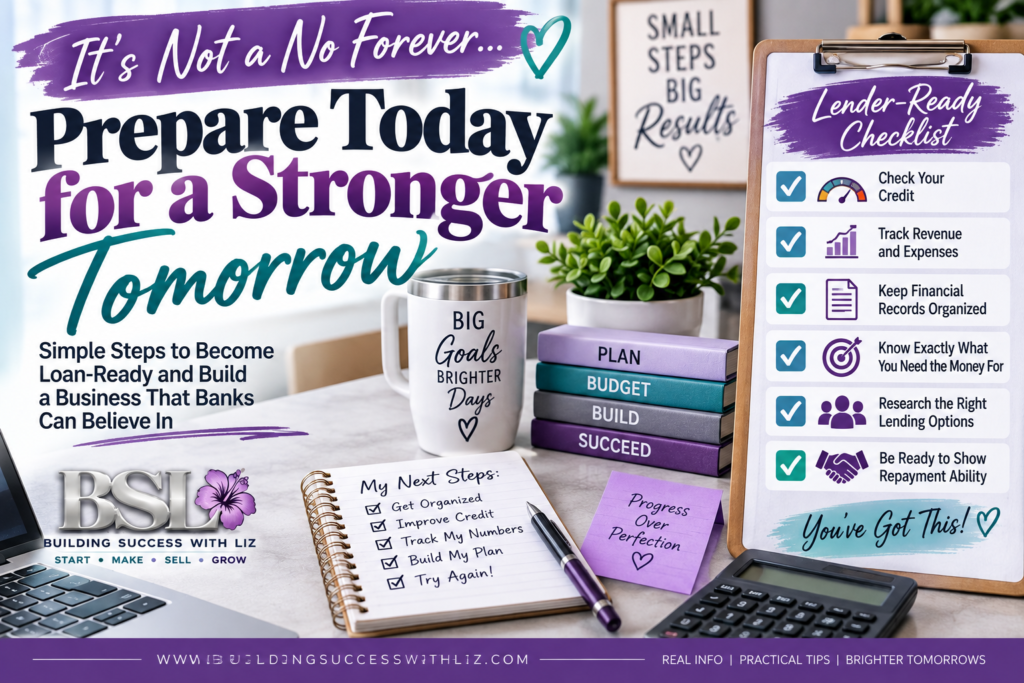
Build your records. Track your sales. Understand your expenses. Keep business and personal finances organized. Learn what your credit looks like. Know exactly why you need the money. Research the financing product before applying.
Then approach borrowing as a business decision, not as the prize you receive for forming an LLC.
Frequently Asked Questions About LLC Business Loans
Can I get an LLC business loan immediately after forming my LLC?
Possibly, depending on the lender and financing product, but forming the LLC itself does not guarantee approval. A very new business may have little operating or credit history, so other factors, including the owner’s creditworthiness and repayment ability, can become particularly important.
Does having an EIN mean my business has business credit?
No. An EIN identifies the business for federal tax purposes. It does not by itself establish a history of borrowing and repaying business credit.
Will a lender check my personal credit for a business loan?
It may. Requirements vary by lender and financing product. For newer businesses without an established financial history, the owner’s personal credit can be particularly important. The SBA notes that loan eligibility for a new business is typically based on the owner’s personal credit score.
What if a traditional bank denied my LLC business loan?
Find out why you were denied before applying elsewhere. Then determine whether you need to strengthen the application or whether another legitimate financing product better fits your situation. SBA-backed financing and microloans may be worth researching, but they still have eligibility and underwriting requirements.
Are SBA loans free money?
No. SBA loan programs are loans, not grants. The SBA generally guarantees a portion of qualifying loans made through participating lenders; the borrower is still responsible for repayment.
Before You Go, Tell Me This
If you’ve formed a business and looked into financing, what surprised you most about the process?
Was it the credit requirements? The financial documents? Being asked for personal information? The amount of business history lenders wanted? Or simply realizing that having an LLC didn’t automatically mean the business was ready to borrow?
Share your experience in the comments. Your question may help another beginner understand what to prepare before walking into a bank.
And if you know someone who recently formed an LLC and thinks financing automatically comes next, save or share this guide with them before they start applying.